
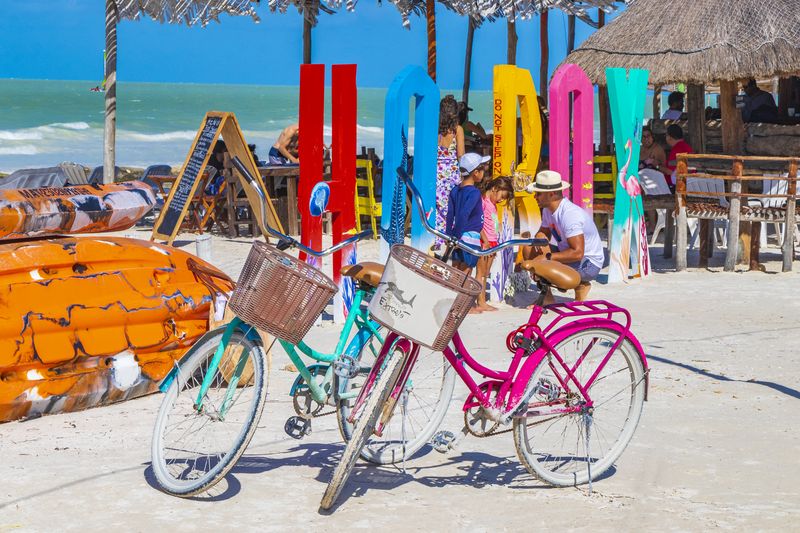
Holbox sits off the northern tip of Yucatán — a narrow sandbar island with no cars, no stoplights, and streets made of packed sand. You get there by a 25-minute ferry from Chiquila, run by the Holbox Express service for about $10 USD each way. Most visitors come for two or three days, plant themselves on the Caribbean-facing beach, eat tacos, and leave without touching what actually makes the island worth the trip.
These eight activities are the ones that separate a forgettable beach vacation from a trip worth repeating. Some are seasonal. Some cost real money. All of them require knowing something the average tourist does not bother to find out.
Swimming With Whale Sharks Near Holbox — What the Brochures Gloss Over
This is the reason most international visitors put Holbox on their list, and it delivers — but only if you approach it correctly. The shallow waters of Yum Balam Biosphere Reserve, directly north of the island, attract one of the largest aggregations of whale sharks on earth every summer. They come to feed on massive spawn events: tuna eggs, little tunny spawn, and other nutrient blooms that concentrate in the warm, shallow water. You will swim alongside animals that routinely reach 30 feet in length, and they are entirely unbothered by your presence.
But there is a lot the glossy tour descriptions leave out.
When does the whale shark season actually run?
The official season is mid-June through mid-September. Peak aggregations happen in July and August, when conditions are most predictable. If you visit outside this window — say, in December or February — no legal operator will run a whale shark excursion regardless of what they advertise online. The restrictions exist for conservation reasons, and CONANP (Mexico’s federal protected areas agency) enforces them with on-water inspectors.
Book three to four weeks out if you are going in July or August. These tours genuinely sell out, especially on Saturdays. If you want more flexibility, go mid-June or early September — the sharks are still present, prices are slightly lower, and you will not need to compete for spots.
How to pick a reliable tour operator
Full-day whale shark tours run $80–$150 USD per person and include snorkel gear, a light lunch, and usually a stop at Yalahau freshwater spring. The price variance mostly reflects boat quality and guide experience, not shark access — the sharks are in the same water for everyone.
Holbox Dream and Villas Flamingos both book through established local fishing cooperatives that hold CONANP permits. The cooperatives run on a rotation system to avoid crowding any single shark. Government rules cap interactions at two swimmers plus one guide per shark at a time.
Avoid captains on the beach offering private tours below $60. These boats often skip the CONANP safety briefing, exceed swimmer limits, and sometimes do not find sharks at all because they are outside the official spotter network. Pay full price through a verified operator. This is not a corner worth cutting.
What the experience is actually like
The boat leaves the main dock at 7am and reaches the shark aggregation after 45–90 minutes of open-water travel, depending on where the animals are feeding that day. Your guide spots a fin, the boat pulls alongside, and you slip into the water with your snorkel.
The shark feeds at the surface, mouth open, moving slowly forward. You swim parallel to it — not in front, not directly above. The naturalist keeps you correctly positioned. Visibility on a good day is 15–20 meters. Most interactions last 3–5 minutes before the boat repositions to the next animal.
Most people describe the emotional impact before the physical one. It is large in a way that does not register until you are in the water with it. The snorkeling is easy — you are floating, not diving. If you are a weak swimmer, tell your operator upfront. Life vests are available and nobody will judge you for using one.
Bioluminescent Plankton: One Scheduling Note That Changes Everything
Every tour operator on the island runs nighttime kayak tours through the lagoon — $25 to $40 USD per person, 90 minutes, paddles through channels where the water lights up blue-green around every stroke. The tours run year-round. The single variable that determines whether you see something genuinely spectacular or almost nothing is the moon phase. Book within three nights of a new moon and the effect is stunning. Book during a full moon and ambient light washes out the bioluminescence entirely. Check the lunar calendar before you reserve — no operator will volunteer this information unprompted.
Activity Timing, Cost, and Booking Reality for All Eight
Holbox runs almost entirely on cash. The island has two ATMs — one near the central square, one near the ferry dock — both with withdrawal limits and a reliable habit of running empty on weekends. Withdraw pesos in Chiquila before you board the ferry. This is the most consistently repeated practical warning across every Holbox travel forum, and visitors still show up unprepared.
Here is a realistic breakdown of all eight activities, with 2026 pricing and honest booking requirements:
| Activity | Best Season | Cost (USD per person) | Book Ahead? |
|---|---|---|---|
| Whale shark swimming | Mid-June to Mid-September | $80–$150 | 3–4 weeks in July/August |
| Bioluminescent plankton kayaking | Year-round (new moon nights) | $25–$40 | 1–2 days ahead |
| Flamingo watching at Punta Mosquito | October to May | Free (golf cart ~$40–$60/day) | No |
| Kitesurfing lessons | November to March | $60–$100/hour | Yes — book with school directly |
| Yalahau Lagoon freshwater spring | Year-round | $30–$50 (shared boat) | No — arrange day-of |
| Isla Pájaros bird sanctuary | Year-round | $35–$60 | No — ask hotel night before |
| Punta Cocos sunset | Year-round | Free (golf cart access) | No |
| Golf cart island exploration | Year-round | $40–$60/day (full cart) | No — rent on arrival |
Realistic four-day budget for all eight activities, including ferry ($20 round trip), mid-range guesthouse accommodation ($60–$120/night), food, and incidentals: approximately $450–$650 USD per person. Holbox prices closer to Tulum than to mainland Yucatán — it is not a budget destination by Mexican standards. The activities justify the spend if you plan around them rather than improvising on arrival.
Five Mistakes That Will Cost You the Best Parts of Holbox
These are not edge cases. They are the most common reasons visitors leave Holbox wishing they had done something differently.
- Visiting in July or August expecting tranquility. Peak season is brutally crowded. The beach fills up, golf cart rental shops run out of vehicles by 9am, and the quiet, off-the-beaten-path reputation the island carries evaporates quickly. If your priority is atmosphere over whale sharks, go in November, February, or early March instead. Prices drop 20–30%, the flamingos at Punta Mosquito are present, and the island feels like itself again.
- Booking the cheapest whale shark tour on the beach. The $50 beach operators sometimes lack valid CONANP permits, overcrowd the boat, and skip the official spotter network. You might get lucky. You might spend five hours at sea and return sunburned with no whale shark encounter. Pay the $100–$150 and book through a guesthouse with vetted operator connections.
- Not renting a golf cart on day one. The island is roughly 26 miles long. The interesting parts — Punta Mosquito, Punta Cocos, the lagoon channels — are far from the main beach square. Renting a golf cart at $40–$60 per day is the single best logistical decision you can make on Holbox. Bikes work for the town center but not for the full eastern stretch.
- Skipping Yalahau Lagoon because it sounds minor. Yalahau is a freshwater spring that pushes cold, crystal-clear water up through the floor of a saltwater lagoon. The contrast in temperatures is genuinely disorienting. It is included in most whale shark tours, but you can also visit by shared boat for $30–$50 independently. Do not skip it on the grounds that you have seen cenotes before. This is different.
- Planning a kitesurfing trip in the wrong season. Holbox is a legitimate kitesurfing destination, with schools like Kitesurfing Holbox and Liquid Air Kitesurfing running beginner lessons at $60–$80 per hour. But the wind that makes Holbox good for kitesurfing — steady trade winds at 15–25 knots — only comes reliably from November through March. Outside that window, conditions are patchy and lessons are not worth the cost.
One practical note that every visitor review mentions and most future visitors ignore: mosquitoes on the lagoon side of the island are aggressive at dawn and dusk. Bring DEET-based repellent. The flamingo sandbar at Punta Mosquito is named for a reason.
The Wilder Side of Holbox: Flamingos, Bird Islands, and Lagoon Sunsets
The Caribbean-facing beach gets all the photography. The lagoon side of Holbox — facing Yum Balam — is where the island becomes genuinely unusual rather than just another pretty stretch of sand.
Punta Mosquito is a long, shallow sandbar about 30 minutes by golf cart east of the main square. From October through May, a flock of wild American flamingos — often 200 or more birds — wades in the flats there during low tide. They are not managed, not fed, not corralled near a viewing platform. They use the sandbar because the shallow saltwater there is ideal foraging habitat. Go at 7am, before the heat and boat traffic from snorkeling tours push the birds further out. There is no entrance fee and no facilities. Park the golf cart, walk to the water, and do not approach closer than 40 meters — the birds will flush if you do.
Isla Pájaros: The Bird Sanctuary That Rewards the Curious
Isla Pájaros sits in the lagoon 20 minutes by boat from the main dock. It is a protected mangrove island, home to nesting colonies of roseate spoonbills, frigatebirds, tricolored herons, and white ibis. No visitor sets foot on the island — tours circle it by flat-bottomed boat while a guide identifies what is nesting in front of you.
Spoonbills are the highlight. They are a vivid, almost artificial pink — brighter than flamingos — and surprisingly large up close. Watching 30 of them wheel around a mangrove canopy from calm water is the kind of moment that makes you realize how much you were missing while parked on the main beach all day.
Tours run $35–$60 per person. Your guesthouse can arrange a shared group boat the evening before — no need to book weeks in advance. Morning departures around 7:30–8am catch the best bird activity before the heat builds.
Punta Cocos: The Best Sunset on the Island Has No Bar
The western tip of the island, Punta Cocos, is the sunset destination locals actually use. No bar, no hammock rental, no food vendors. Just a flat stretch of sand facing west across the open lagoon, with mangrove silhouettes in the distance and wide, unobstructed sky above.
Drive out about an hour before sunset. Bring drinks from town. The drive takes 20 minutes from the main square by golf cart. Even in peak season, the crowd thins dramatically once you pass the last guesthouse cluster heading west. This is how the island looks when it is not performing for visitors — and it is worth seeing at least once before that changes.