
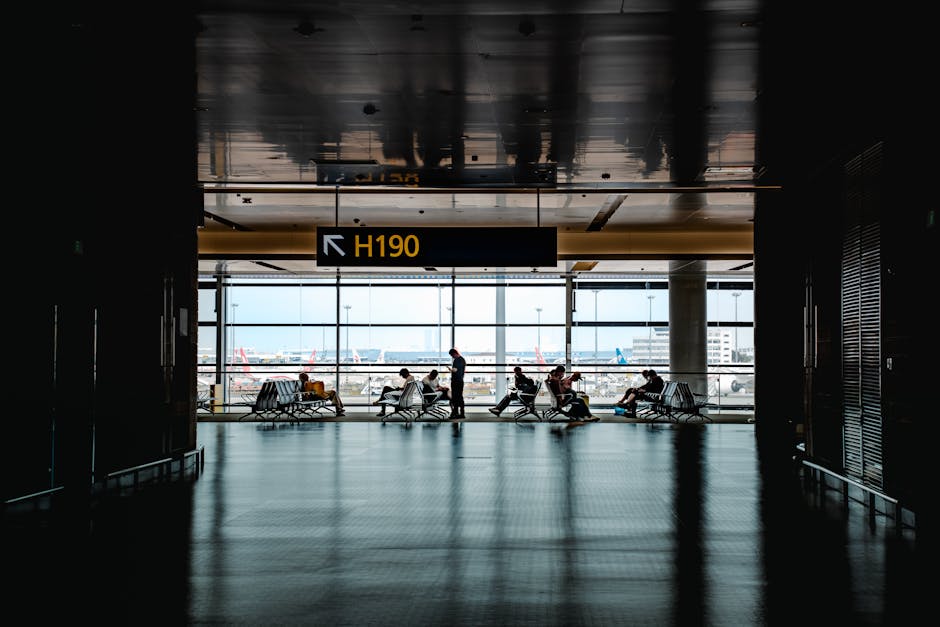
There is a persistent myth that the only way to survive an airport without a nervous breakdown is to arrive four hours early and sit by your gate in a state of hyper-vigilant boredom. Most people treat the airport as a chaotic obstacle course where they are the victim of the system. I used to think the same way. I would hover near the monitors, clutching my boarding pass like a lucky charm, convinced that if I looked away for a second, my flight would vanish. After a decade of living out of a carry-on, I have realized that the airport is not a hurdle; it is a predictable machine. If you understand how the gears turn, you stop being the person fumbling with their belt at the X-ray machine while fifty people sigh behind them.
Stress in an airport usually comes from a lack of systems. When you do not have a designated spot for your passport, you panic. When you do not know if your lounge access actually works in Terminal B, you wander. Navigating these hubs efficiently is about front-loading your decisions so that by the time you step onto the curb at departures, the rest of the day is on autopilot. It is not about rushing; it is about removing the friction points that make travel feel like a chore.
How to Navigate Airport Security and Customs Efficiently?
The security line is the single biggest point of failure for most travelers. I have watched grown adults act surprised that they have to take their laptops out of their bags, despite having stood in line for twenty minutes behind signs telling them to do exactly that. Efficiency here is a combination of the right documentation and the right packing strategy. If you travel more than twice a year, relying on the standard line is a poor use of your time and mental energy.
Expedited Entry Programs Comparison
| Program | Approximate Cost | Best For | Key Advantage |
|---|---|---|---|
| TSA PreCheck | $78 (5 years) | Domestic US travel | Keep shoes/light jackets on; electronics stay in bag. |
| Global Entry | $100 (5 years) | International travelers | Includes PreCheck plus expedited US customs entry. |
| CLEAR Plus | $189 (Annual) | High-frequency flyers | Uses biometrics to skip to the front of the security line. |
I personally recommend Global Entry over TSA PreCheck every single time. For an extra $22, you get the benefits of PreCheck plus the ability to bypass the massive customs lines when returning to the United States. Many premium credit cards even reimburse this fee, making it effectively free. However, the real secret to a fast transit is the CLEAR Plus system. While Global Entry gets you into a faster lane, CLEAR physically moves you to the front of that lane. In airports like ATL or JFK, this can save you forty minutes during peak Monday morning rushes.
Beyond the paperwork, your physical packing determines your speed. I use the Peak Design Tech Pouch (approx. $59). It is an origami-style bag that holds all my cables, chargers, and external batteries. Pro: It stands upright on its own and fits perfectly into the side pocket of a backpack. Con: It is somewhat bulky, so if you are a minimalist packer, it might feel like overkill. By keeping all my “scannable” items in one pouch, I can pull it out in one motion if I am in a non-PreCheck lane. I never have to dig through the bottom of my bag for a stray charging brick while a TSA agent stares me down.
The goal is to be “the ghost” in the security line—the person who moves through the metal detector before anyone even notices they were there.
Customs is another beast entirely. If you are entering the US and do not have Global Entry, download the Mobile Passport Control (MPC) app. It is a free, official app from US Customs and Border Protection. You can submit your declaration while you are still taxiing to the gate. Most major airports have a dedicated MPC lane that is significantly shorter than the general line. It is a legitimate shortcut that most people simply ignore because they are too busy checking their emails the moment the plane lands.
What Are the Best Strategies for Managing Long Layovers?
Layovers used to be my nightmare. Six hours in a terminal with uncomfortable plastic seating and overpriced, soggy sandwiches is a recipe for exhaustion. But if you treat the layover as a scheduled break rather than a delay, you can actually get work done or rest effectively. The secret lies in the “Lounge Math.”
Most people see a $50 day pass for an airline lounge and think it is a luxury they cannot afford. Let us break down the cost of sitting at a gate for four hours. A mediocre airport sandwich is $16. A bottle of water is $6. Two coffees or a beer will run you another $15 to $20. You are already at $40, and you are sitting in a noisy terminal with no power outlets. For an extra $10, a lounge gives you high-speed internet, a quiet workspace, decent food, and often, a shower. To me, that is not a luxury; it is a productivity investment.
Lounge Access Options
- Priority Pass: This is the most common network. It is often included with cards like the Chase Sapphire Reserve (approx. $550 annual fee). Pro: Massive global network of over 1,300 lounges. Con: Lounges can get extremely crowded, and some may turn away Priority Pass holders during peak hours.
- American Express Centurion Lounges: Exclusive to Platinum and Centurion cardholders. Pro: Significantly better food and cocktail programs than standard lounges. Con: The $695 annual fee for the Amex Platinum is steep if you do not travel monthly.
- Minute Suites: Found in many US hubs like DFW and PHL. These are private, soundproof mini-rooms with a daybed and a desk. They usually cost around $55 per hour. If you absolutely need to sleep or take a confidential call, this is the best option in the building.
If you are stuck in a terminal without lounge access, head to the international terminal. Even if your flight is domestic, international terminals almost always have better seating, more power outlets, and higher-quality food options. I have spent many comfortable hours in the Tom Bradley International Terminal at LAX despite having a flight departing from Terminal 4. The walk is worth the upgrade in environment.
Hydration is the other silent killer of layover comfort. The air in airports and planes is notoriously dry. I carry a Vapur Eclipse Foldable Water Bottle (approx. $14). Pro: It rolls up to the size of a candy bar when empty, saving space in my bag. Con: It can be a bit floppy to drink from compared to a rigid bottle. Filling it up immediately after security ensures I am not paying $6 for a plastic bottle every three hours. It sounds small, but staying hydrated prevents that specific type of airport headache that ruins the first day of your trip.
Which Travel Gear and Technology Improves the Airport Experience?
I am a firm believer that you should never check a bag if you can avoid it. Checking a bag adds at least thirty minutes to your departure and thirty minutes to your arrival, not to mention the risk of the airline losing your belongings. The right gear makes the carry-on lifestyle possible even for two-week trips. It also changes how you move through the terminal.
Essential Hardware for Terminal Navigation
When it comes to luggage, I use the Away The Bigger Carry-On (approx. $295). Pro: The polycarbonate shell is nearly indestructible, and the 360-degree wheels are incredibly smooth on terminal carpet. Con: It is slightly larger than the standard carry-on limit for some European budget airlines like Ryanair or EasyJet. If you fly those frequently, stick to the standard “Carry-On” model. The internal compression system in the Away bag allows me to pack about 20% more than a traditional suitcase, which is the difference between needing to check a bag and keeping it with me.
Noise is the primary stressor in an airport environment. The constant drone of engines, the announcements, and the general clamor of thousands of people will drain your energy. I do not travel without the Sony WH-1000XM5 Noise Canceling Headphones (approx. $399). Pro: The active noise cancellation is the best I have ever used; it can turn a chaotic terminal into a silent library. Con: They do not fold up as small as the previous XM4 model, taking up more room in your bag. I consider these a piece of essential safety equipment for my sanity.
Power management is the final piece of the puzzle. You cannot rely on finding an open outlet at the gate. I carry the Anker 737 Power Bank (approx. $149). Pro: It has a 140W output, which is powerful enough to charge a MacBook Pro at full speed. Con: It is heavy, weighing about 1.4 pounds. However, having enough juice to charge my phone five times over means I never have to join the “power outlet vultures” huddling around a charging station on the floor. I can sit anywhere I want, stay connected, and keep my devices ready for the flight.
Lastly, I use Apple AirTags (approx. $29 each) in every bag I own. Even if I am carrying my bag onto the plane, there is always a chance the overhead bins will be full and the crew will force a gate-check. Knowing exactly where my bag is—whether it is under the plane or left behind at the gate—removes the anxiety of the unknown. It is a small price for total visibility.
The airport experience is ultimately what you make of it. You can be the person struggling with a heavy duffel bag, dehydrated and frustrated by the lines. Or you can be the person with a system. By investing in a few key pieces of gear and understanding the logistics of expedited entry and lounge access, you turn a stressful transition into a seamless part of your journey. It took me years to stop fighting the airport and start working with it. Hopefully, these strategies help you do the same on your next trip.