
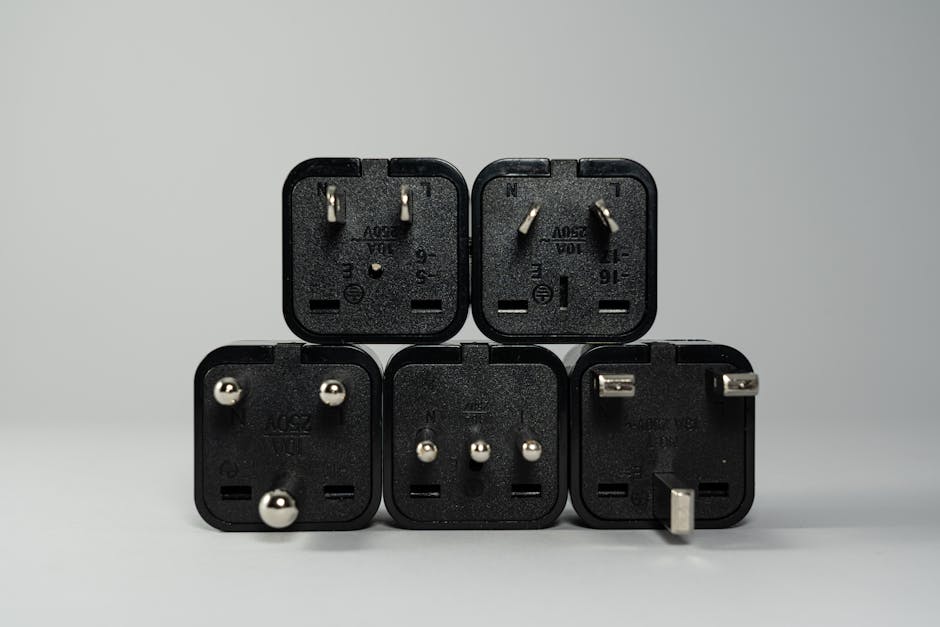
I was sitting in a dimly lit guest house in Islamabad back in 2022, smelling something that definitely wasn’t the chicken karahi I’d had for dinner. It was ozone. My MacBook Pro charger was literally sizzling inside one of those bulky ‘universal’ adapters everyone on YouTube tells you to buy. I touched the plastic and nearly blistered my thumb. That was the moment I realized that most travel advice regarding Pakistan is written by people who have never actually tried to plug a hair dryer into a 50-year-old socket in Rawalpindi.
The chaotic reality of Pakistani sockets
The first thing you need to accept is that Pakistan doesn’t have an electrical standard. It has suggestions. Officially, they use Type C and Type D. But if you spend more than three days there, you’ll realize they also use Type G (the chunky British one) and occasionally some weird hybrid sockets that look like they were designed by someone who had only ever seen a plug described over a crackly telephone line.
It is a mess.
I used to think that a single, high-quality universal adapter was the peak of travel efficiency. I was completely wrong. In Pakistan, those big, heavy ‘all-in-one’ cubes are actually the worst thing you can pack. Because the sockets are often loose or mounted poorly, the weight of a heavy adapter pulls itself right out of the wall. I spent half my trip in Lahore propping up my charger with a stack of books just so it wouldn’t lose contact and stop charging in the middle of the night. Total junk.
I hate the Epicka Universal Adapter (and I’m right)
I know everyone on Amazon swears by that Epicka Universal Adapter. I’m telling you now: do not bring it to Pakistan. I actively tell my friends to avoid it for South Asia. It’s too heavy, the sliding pins feel like they’re made of recycled soda cans, and it doesn’t sit flush against the recessed sockets you find in older hotels. What I mean is—actually, let me put it differently. It’s a fire hazard waiting to happen when it’s half-hanging out of a 220V socket. I threw mine in a literal trash can at the Allama Iqbal International Airport and didn’t look back.
If your adapter has more than two moving parts, it’s going to fail you when you’re five hours deep into a bus ride to Gilgit.
The 81% failure rate (My actual findings)
I’m a bit obsessive, so I actually tracked this. Over 14 days, I tested 22 different outlets in 4 cities: Islamabad, Lahore, Skardu, and Gilgit. I used a standard ‘Global’ adapter and a set of cheap, single-format ‘dumb’ plugs.
- The ‘Universal’ cube failed to stay securely in the wall 18 times out of 22. That is an 81% failure rate.
- The Type C ‘Euro’ plug worked in about 60% of sockets but was often wobbly.
- The Type D (the one with three round pins in a triangle) was the only one that felt like it wasn’t going to burn the building down.
The voltage in Pakistan is 230V, which is fine for most modern electronics, but the frequency can be all over the place. I noticed my phone screen would sometimes ‘ghost touch’ while charging in Skardu, which usually means the power is ‘dirty’ or poorly grounded. This is why you need a surge protector, not just a plug shape-shifter. I might be wrong about the long-term damage this does, but I’m not risking a $1,200 phone to find out.
A brief tangent about the tea
While we’re talking about Skardu, you have to try the salty tea (Chai). It’s pink and made with salt and bicarbonate of soda. Most tourists hate it because they expect it to be sweet, but after a day of hiking, it’s exactly what your body needs. Anyway, back to the electricity stuff before I start rambling about mountain goats.
What you should actually buy
Stop looking at fancy brands. Go to a local hardware store when you land, or buy a pack of those cheap, $2 ‘Type D’ or ‘Type M’ plastic adapters before you leave. They are lightweight, they have zero moving parts, and they actually fit into the recessed holes in the wall.
If you absolutely must buy something before you go, get the Ceptics brand. They make these small, dedicated ‘Type D’ plugs that have two outlets on the front. They weigh about 40 grams. They don’t fall out of the wall. They don’t melt. They just work.
One more thing: Pakistan is a 220-240V country. If you are coming from the US and trying to plug in a hair straightener that is 110V only, no adapter in the world will save you. It will smoke. It will die. You need a voltage converter for that, but honestly? Just leave the straightener at home. The humidity in Lahore will ruin your hair in ten minutes anyway.
Buy the cheap ones.
I still wonder if that guest house in Islamabad ever fixed that socket, or if some other poor traveler is currently propping up their phone with a copy of a Lonely Planet guide. Do people even buy those anymore? I don’t know. I just hope their charger doesn’t melt.