
When most travelers think of Morocco, their minds drift to the bustling souks of Marrakech, the snake charmers of Jemaa el-Fnaa, and the terracotta walls of the Red City. But Morocco is a country of astonishing diversity, and some of its most unforgettable experiences lie well beyond the tourist trail. From blue-washed mountain villages to sprawling desert oases, these hidden gems will completely transform how you think about this North African jewel.
Chefchaouen: The Blue Pearl of the Rif Mountains
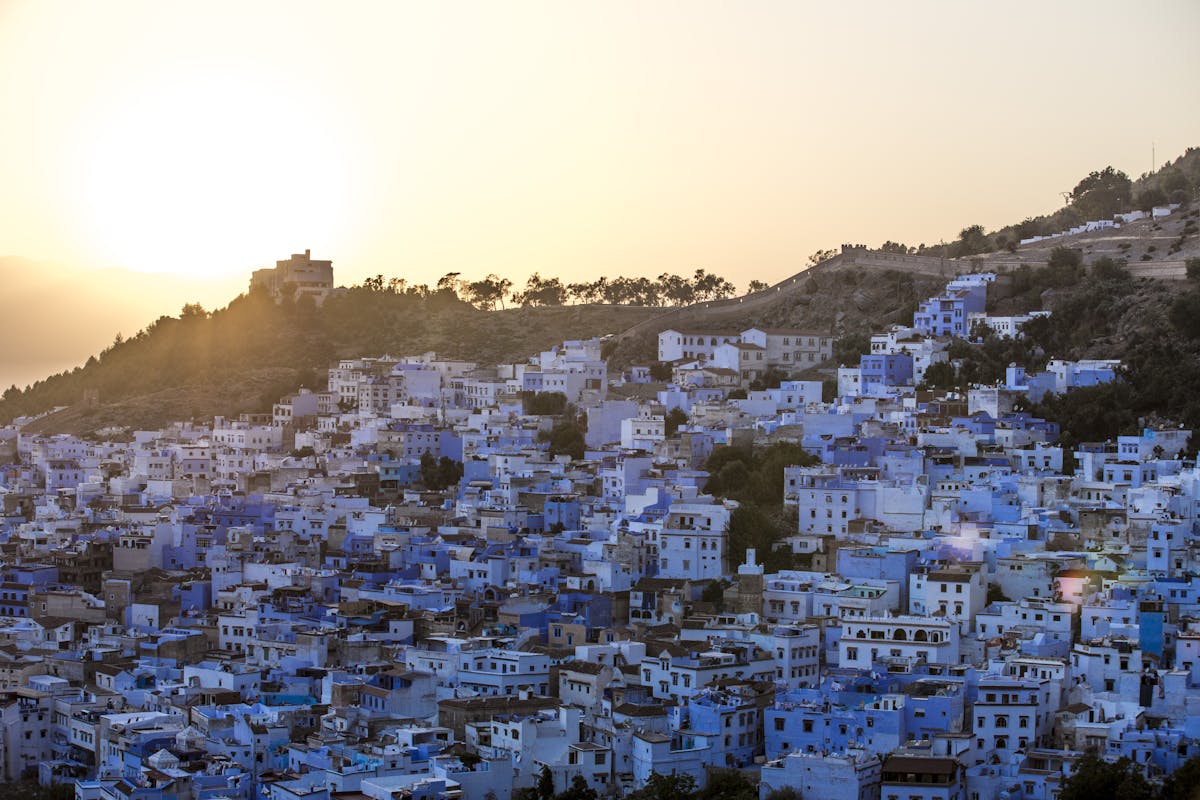
Tucked into the rugged Rif Mountains in northwest Morocco, Chefchaouen is a dreamy labyrinth of blue-painted streets, doorways, and staircases. Originally founded in 1471 as a small fortress, the town’s signature blue hues are said to have been introduced by Jewish refugees in the 1930s, who believed the color symbolized heaven and reminded them to lead a spiritual life.
Walking through the medina here feels like stepping into another world entirely. Unlike the overwhelming energy of Marrakech, Chefchaouen moves at a gentler pace. Local artisans sell handwoven blankets and goat cheese in quiet plazas, and you can hike to the Spanish Mosque on the hill above town for a panoramic sunset view that will take your breath away. The best time to visit is spring (March to May) when wildflowers carpet the surrounding hillsides.
Essaouira: Where the Atlantic Meets the Medina
If Marrakech feels too chaotic for your taste, Essaouira is the antidote. This laid-back coastal city on the Atlantic has been a haven for artists, musicians, and surfers for decades. Jimi Hendrix famously visited in the late 1960s, and the city’s bohemian spirit remains very much alive today.
The medina here is a UNESCO World Heritage Site, but it’s far less overwhelming than its counterparts in Fez or Marrakech. You can wander through the fish market at the port, watching local fishermen haul in the day’s catch, then sit down at one of the open-air grills to feast on freshly grilled sardines for just a few dollars. The wide, windswept beach stretches for miles, making it perfect for kitesurfing or long evening walks. Don’t miss the annual Gnaoua World Music Festival if you’re visiting in June.
The Draa Valley: Morocco’s Hidden Oasis Route
South of the High Atlas Mountains, the Draa Valley stretches for over 200 kilometers, a ribbon of green palmeraies cutting through an otherwise arid landscape. This ancient caravan route, once used by traders heading to Timbuktu, passes through some of Morocco’s most spectacular scenery.
The town of Zagora serves as the gateway to the valley, and from here you can arrange camel treks into the Sahara or explore the string of kasbahs and ksour (fortified villages) that dot the route. The village of Tamnougalt, with its crumbling 16th-century kasbah, offers a fascinating glimpse into traditional Berber architecture. Many of these ancient structures are slowly being restored as boutique guesthouses, offering an authentic alternative to Marrakech’s riads.
Moulay Idriss Zerhoun: Morocco’s Holiest Town
Perched on two hills overlooking the ruins of the Roman city of Volubilis, Moulay Idriss Zerhoun is considered Morocco’s holiest town. It’s named after Moulay Idriss I, the founder of Morocco’s first dynasty, whose tomb remains an important pilgrimage site. Until 2005, non-Muslims weren’t even allowed to spend the night here.
Today, a handful of charming guesthouses welcome visitors, and the town provides a wonderfully authentic experience far from tourist crowds. The Saturday market fills the main square with local produce, olives, and spices. From the terrace of any rooftop cafe, you can gaze across the olive groves toward the columns of Volubilis, one of the best-preserved Roman archaeological sites in North Africa, which is only a 30-minute walk away.
Dades Gorge and Todra Gorge: Canyon Country
The dramatic gorges of the eastern High Atlas are among Morocco’s most spectacular natural landscapes, yet they see only a fraction of the visitors who flock to the Sahara. Todra Gorge, with its 300-meter-high canyon walls narrowing to just 10 meters apart, is particularly awe-inspiring. In the morning light, the rock glows in shades of orange and pink that seem almost unreal.
Nearby Dades Gorge offers equally stunning scenery, with a winding road that climbs through rock formations locals call “monkey fingers” due to their unusual shape. Both gorges offer excellent hiking, from gentle riverside walks to more challenging scrambles up to panoramic viewpoints. The small towns along the route provide simple but welcoming accommodation, and the stargazing out here, far from any city lights, is absolutely phenomenal.
Practical Tips for Exploring Morocco’s Hidden Gems
Renting a car is the most flexible way to reach these off-the-beaten-path destinations, though the mountain roads can be challenging. Grand taxis (shared long-distance taxis) connect major towns, and CTM buses run reliable routes throughout the country. Budget around 300-500 MAD (approximately $30-50 USD) per day for comfortable mid-range accommodation and meals outside the major cities.
Learn a few phrases in Darija (Moroccan Arabic) or French, as English is less widely spoken outside tourist areas. Most importantly, embrace the slower pace. The real magic of Morocco’s hidden corners reveals itself when you stop rushing and let the country unfold at its own rhythm.
Ready to Discover the Real Morocco?
Marrakech will always deserve its place on the travel map, but the Morocco that lies beyond it is where the truly transformative experiences await. Whether you’re sipping mint tea in a blue-washed courtyard in Chefchaouen or watching the sun set over the Sahara from a Draa Valley kasbah, these hidden gems offer the kind of authentic, uncrowded travel experiences that are becoming increasingly rare. Start planning your Moroccan adventure today, and prepare to have your expectations completely exceeded.