
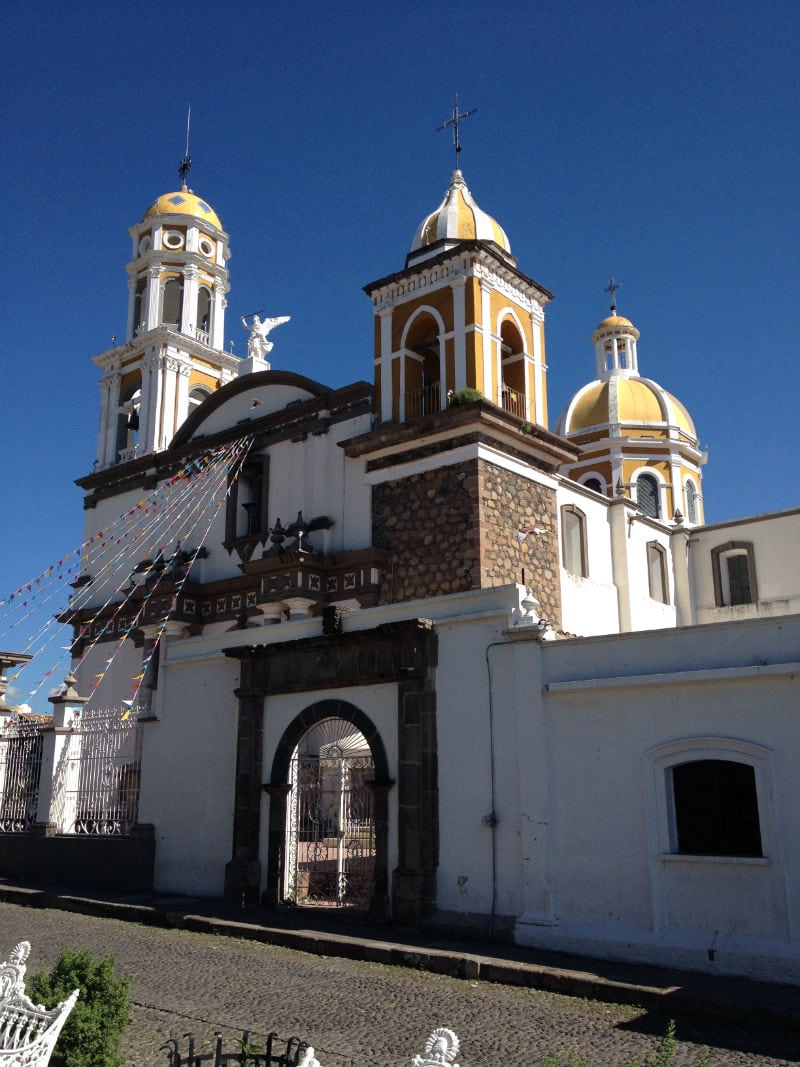
You’ve landed in Guadalajara with a free day and someone mentions Comala — “Mexico’s white town,” they call it. You look it up, see photos of cobblestone plazas and clay cups of warm ponche under stone arches, and the planning starts immediately. Then you notice that Colima city sits just 10 kilometers from Comala, and the obvious question follows: can you reasonably do both in a single day?
The answer is yes — but only if the sequencing is right. Here’s exactly how that day works.
Getting to Colima from Guadalajara: Your Real Options
The Guadalajara–Colima corridor is well-served by intercity buses. Three companies dominate the route:
- Primera Plus — typically the fastest and most frequent option. Departures roughly every 90 minutes from Guadalajara’s Central Camionera Nueva. Journey time runs about 2 hours 30 minutes. Tickets generally fall between 280–350 MXN ($14–18 USD) as of early 2026.
- ETN Turistar — wider seats and a quieter cabin than Primera Plus. Similar journey time, with tickets around 320–420 MXN. Worth the extra 60–70 pesos if mountain roads make you uneasy.
- ADO — also covers this route at prices comparable to Primera Plus. Their app shows current schedules; ADO has expanded Colima service in recent years.
Driving the MEX-54 toll road from Guadalajara takes about 2 hours and costs roughly 200 MXN in tolls one-way. A rental car gives you the most flexibility — especially for the Colima–Comala leg, which is about 20 minutes north on Highway 54 and awkward to manage on tight bus timing.
What Time to Leave Guadalajara
A 6:30–7:00 AM departure is the right call. You want to arrive in Colima no later than 10:00 AM, giving you a full morning in the city before moving to Comala for lunch. Midday is when Comala’s portales reach full tempo — locals arrive, the kitchen rhythm picks up, and the slow ritual of ponche and botanas makes complete sense. A later start compresses everything that makes the day worthwhile.
Getting Between Colima City and Comala
Taxis from Colima’s historic center to Comala’s main plaza typically run 100–150 MXN and take about 15–20 minutes. There’s a local minibus (ruta) from the area near Mercado Damián Carmona that costs around 15 MXN — but it runs on informal schedules and can add 30–45 minutes of wait time. For a day trip where time is the binding constraint, the taxi is the correct choice. Uber generally operates in Colima as well and can run cheaper; check availability when you arrive.
Can You Actually Do Both Cities in One Day?
Yes — provided you treat Colima city as a half-day stop, not a full exploration. Three to four focused hours in the city center covers the cathedral, the central market, and a proper breakfast. Then move to Comala and stay for at least two to three hours, including a long lunch under the portales. Travelers who attempt equal time in both cities generally end up rushed at each. Decide your priority before you leave Guadalajara, and plan accordingly.
What to Do in Colima City: Cathedral, Market, and the Volcano Question
Colima city is small by Mexican standards — roughly 170,000 residents — and its historic center compresses most of what a first-time visitor needs into about 10 walkable blocks. That’s a genuine structural advantage for someone working within a single day.
The Cathedral and Jardín Núñez
The Catedral Basílica Menor de Colima faces the main plaza and is worth 20–30 minutes of your morning. The current structure dates largely from the early 20th century — earlier versions were destroyed by earthquakes — and the interior is noticeably cooler than the street, which matters by mid-morning in summer. The Jardín Núñez directly in front of it is a working public square, not a curated tourist space: families, schoolchildren on outings, vendors selling aguas frescas and snacks. Sit for 10 minutes and you get a more accurate read on daily life in a mid-size Mexican city than most guidebooks manage to convey.
Mercado Juárez: Better Than You Expect
Two blocks from the cathedral sits Mercado Juárez, Colima’s main public market. Unlike some Mexican city markets that have drifted toward tourist traffic over the past decade, this one still operates primarily for local residents. The stalls carry dried chiles, handmade chocolate, leather goods, ceramics, and the general supply chain of a working city. The food section on the second level is where you should eat breakfast — look for vendors serving enchiladas colimenses, which differ from the Jalisco style most visitors know, or simply point at whatever has the longest line of locals. Budget 60–120 MXN for a full breakfast with coffee.
Cash only throughout the market. This is also the best place to buy regional products to take home — dried chiles, local chocolate, handmade pottery — before the tourist markup that applies at craft shops closer to the cathedral plaza.
The Volcán de Fuego: Check Before You Commit to a Detour
The Volcán de Fuego de Colima is one of North America’s most consistently active volcanoes and is visible from the highway and from elevated points in the city. Some travelers plan a side trip to the mirador viewpoint, about 45 minutes outside the city. That detour is worth making only when the volcano is visibly active — an ash column or nighttime glow. In quieter phases, the viewpoint shows a distant mountain in varying degrees of haze, which typically doesn’t justify trading 90 minutes from your Comala time.
Before the trip, check cenapred.unam.mx for the current alert phase. Yellow Phase is the most common status and generally means the city and surrounding zones are accessible. Orange or Red Phase may restrict certain roads and viewpoints. The check takes 30 seconds and the information is authoritative — CENAPRED is the Mexican government’s official disaster monitoring agency.
Comala: The Part of This Day Trip You Should Not Cut Short
Most itineraries give Comala 90 minutes. That’s not enough. The entire culture of the town is organized around slowing down, and the travelers who rush through it — one photo at the plaza, a quick cup of ponche, then back to Colima — consistently report that they missed what made it worth going.
The Portales, the Ponche, and How the Meal Actually Works
Comala’s main plaza is ringed by whitewashed colonnaded buildings — the portales — where restaurants have been operating for decades. The tradition is specific to this place: you order drinks, and the kitchen sends out free botanas (appetizers — rotating small plates of tamales, pozole, memelitas, tostadas) as long as you keep ordering rounds. The signature drink is ponche de Comala, served warm in small clay cups, lightly alcoholic, spiced with cinnamon and tamarind. There’s nothing quite like it elsewhere in Mexico.
Restaurant Los Portales de Comala and Mesón de la Diligencia are the two most consistently recommended spots along the plaza-facing arcade. Both have operated for over two decades. Expect to spend 150–300 MXN per person, including drinks and the botanas that keep arriving unprompted. The pace is slow by design — this is where Colima families spend Sunday afternoons with their grandparents, and trying to eat fast defeats the entire structure of the experience.
One practical note: the botana-with-drinks tradition is the norm at the plaza-facing restaurants. Smaller spots on side streets may not follow the same format. Worth clarifying before you sit down.
The Church and the Side Streets Worth a Short Walk
The Parroquia de San Miguel Arcángel on the main plaza dates from the 17th century and takes about 15 minutes to see. More interesting, in practice, are the streets immediately behind the plaza — particularly Calle 16 de Septiembre heading north — where smaller craft shops operate with less foot traffic and more varied inventory. Comala’s historic center is compact enough to walk fully in under an hour without feeling rushed, which makes it less logistically stressful than larger Pueblos Mágicos like Tepoztlán or Taxco.
Five Mistakes That Will Undermine This Day Trip
Travelers who do this route get the same things wrong with predictable regularity:
- Leaving Guadalajara after 9:00 AM. The math doesn’t work out. You’ll arrive around noon, have roughly two hours in Colima at best, and either skip Comala entirely or rush through it when the portales are winding down.
- Going on a Monday. Mercado Juárez stalls and some smaller restaurants in Comala operate on reduced hours or close entirely. Tuesday through Sunday is consistently more reliable for both stops.
- Overallocating time in Colima city. It’s a pleasant place, but there is a natural ceiling on what a first-time visitor needs to see. Four hours is a comfortable allocation. Six means finding reasons to stay rather than things to do.
- Taking the volcano detour without checking CENAPRED first. The Fuego viewpoint is compelling when the volcano is visibly active. When it isn’t, you’re spending 90 minutes round-trip to look at a distant peak through varying degrees of haze. Check the alert level before committing to it.
- Arriving in Comala without cash. Smaller vendors and some plaza restaurants are cash-only. ATMs are available in Colima city center — use one before heading north to Comala, not after you’re already seated at a table.
Day Trip Cost: What You’ll Realistically Spend
Figures below reflect early 2026 conditions and assume round-trip travel from Guadalajara by bus. Currency conversions use approximately 20 MXN per USD — verify current exchange rates before traveling, as that ratio shifts.
| Expense | Budget Option (MXN) | Comfortable Option (MXN) | Notes |
|---|---|---|---|
| Bus: Guadalajara → Colima | 280 | 420 | Primera Plus vs. ETN Turistar |
| Bus: Colima → Guadalajara (return) | 280 | 420 | Last buses typically depart 7:00–9:00 PM |
| Taxi: terminal → city center | 50 | 80 | Uber often cheaper; check availability |
| Breakfast at Mercado Juárez | 60 | 120 | Cash only throughout the market |
| Taxi: Colima city → Comala | 100 | 150 | Negotiate price before entering; ~20 min |
| Lunch and ponche at Comala portales | 150 | 300 | Per person; botanas included with drinks |
| Taxi: Comala → Colima bus terminal | 120 | 150 | Allow 30 min before scheduled departure |
| Incidentals (snacks, crafts, water) | 100 | 300 | No paid entry at major sites in either city |
| Total (per person, round-trip) | ~1,140 MXN / ~$57 USD | ~1,940 MXN / ~$97 USD | From Guadalajara; does not include accommodation |
Safety in Colima State: Reading the Situation Accurately
Colima state has carried elevated crime warnings from the U.S. State Department in recent years — typically a Level 3 “Reconsider Travel” advisory. Travelers deserve a clear-eyed look at what that means for this specific itinerary. Dismissing the context is not helpful. Neither is treating a broad state-level designation as a precise description of conditions in every neighborhood of every city.
What the Travel Advisories Actually Say
The Level 3 designation covers the entire state of Colima as an administrative unit. The Canadian government similarly advises a “high degree of caution” for the region. These advisories are driven primarily by cartel activity concentrated in coastal corridors, rural agricultural zones, and specific highway segments. The advisories themselves acknowledge that risk is not uniform across the state. They do not prohibit travel to Colima; they call for heightened situational awareness, avoiding nighttime travel on rural roads, and staying within known populated and commercial areas. The Colima city historic center and the Comala plaza fall within the lower-risk urban profile described even within those advisories.
What Travelers Who’ve Done This Route Report
Travelers who completed this specific itinerary in 2026 and 2026 generally describe normal tourist experiences at the cathedral area, Mercado Juárez, and the Comala portales. These are daytime public spaces with regular local foot traffic and a family-oriented character. That observation is not a guarantee of any individual’s safety — no travel information can provide that — but it is consistent with what the available evidence generally shows for urban tourist zones within Colima city.
The precaution that matters most is straightforward: avoid rural roads and isolated highway segments after dark. Bus travel between major cities during daylight hours represents a meaningfully different risk profile than driving alone on a rural highway at night. Plan to be on a return bus from Colima by 7:00–8:00 PM at the latest.
How to Make an Informed Decision
Check your government’s official travel advisory for Mexico in the week before your trip — conditions change, and information published in 2026 may not reflect circumstances when you actually travel. The U.S. State Department’s resource is travel.state.gov. The U.K. Foreign, Commonwealth and Development Office and Canada’s travel advisory portal both maintain current assessments as well. Those sources are authoritative in a way that no travel guide can be.
The travelers who skip Colima and Comala entirely based on a headline-level reading of a state advisory often miss something genuinely worth experiencing. The ones who arrive without any awareness of the regional context aren’t serving themselves well either. The useful position sits between those two points: current information, practical precautions, and a decision made on your own terms.
Small-town Mexico — the Pueblos Mágicos, the mid-size state capitals, the working markets that feed actual residents — continues to offer some of the most grounded and distinctive travel the country has to give. As more travelers learn to move through it carefully and knowledgeably rather than either avoiding it or ignoring its complexities, that experience will keep rewarding the ones who do the work to understand where they’re going.