
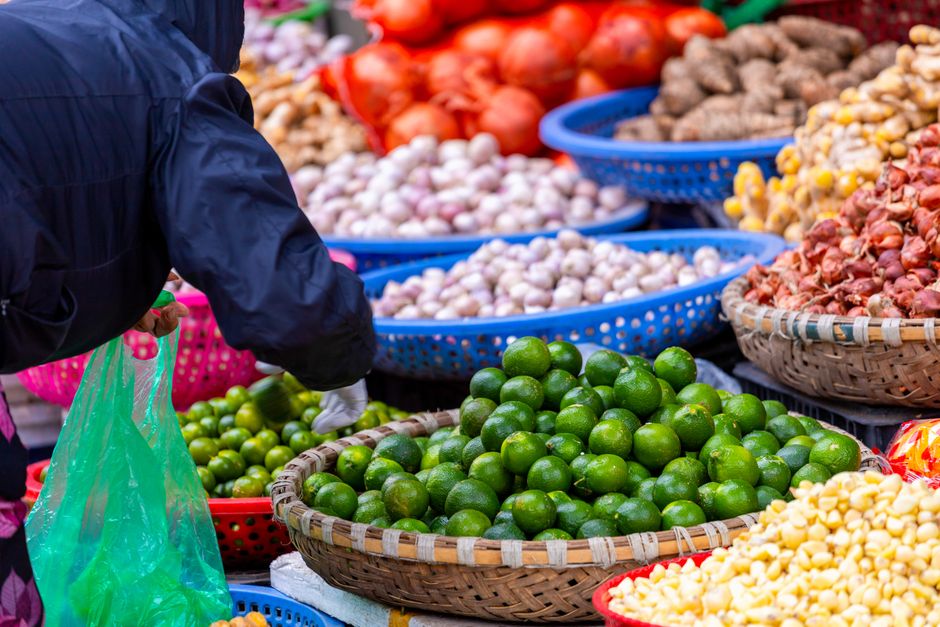
Vietnam serves over 1.5 million bowls of pho every single day. That’s roughly one bowl for every 60 people in the country. Before I landed in Hanoi, I had heard the hype: life-changing broth, silky noodles, beef so tender it barely needs teeth. I wanted to know if the reality matched the reputation.
I spent 21 days eating my way through Hanoi, Hoi An, and Ho Chi Minh City. I ate at Michelin-recommended spots, plastic-stool sidewalk stalls, and one place where the owner used a 1950s French pressure cooker. This is not a sponsored review. I paid for every meal myself. Here is exactly what I found.
Pho: The Baseline Test — Did It Live Up to the Hype?
Short answer: yes, but only if you know where to eat it. The pho I had at tourist-oriented restaurants in Ho Chi Minh City was mediocre — warm broth, chewy noodles, thin beef. The pho I had at Pho Thin (13 Lo Duc, Hanoi) was a completely different dish. The broth there simmers for 12 hours with charred onion, ginger, and star anise. The beef is flash-fried in the wok before hitting the bowl. It costs 70,000 VND ($2.80 USD).
What separates great pho from average pho
Three things. First, the broth must be clear, not cloudy. Cloudy broth means the bones were boiled too hard, which extracts excess fat and impurities. Second, the noodles must be fresh, not dried. Dried rice noodles turn gluey within 3 minutes. Third, the beef should arrive raw and thin enough to cook in the heat of the broth — about 1mm thickness. Pho Gia Truyen (49 Bat Dan, Hanoi) nails all three. Their beef is sliced so thin you can see light through it.
The failure mode most tourists hit
They eat pho for dinner. Locals eat pho for breakfast. By 10:00 AM, many stalls have already sold out. The broth that has been simmering since 3:00 AM is at peak flavor. By evening, that same broth has been reheated multiple times and lost its brightness. I made this mistake on day one. My evening bowl at a busy street stall was dull, greasy, and disappointing. The next morning at the same stall? Perfect.
Bun Cha: The Dish That Beats Pho (In Hanoi)
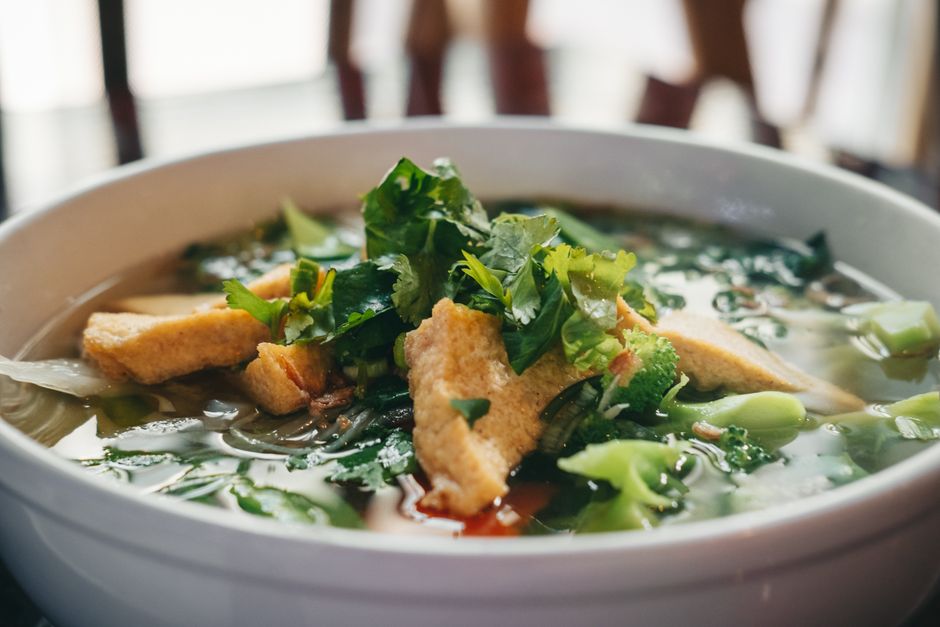
I’ll say it plainly: bun cha is better than pho. Specifically, the bun cha at Bun Cha Huong Lien (24 Le Van Huu, Hanoi) — the same shop where Anthony Bourdain and Barack Obama ate in 2016. The Obama combo costs 130,000 VND ($5.20 USD) and includes grilled pork patties, a bowl of sweet-savory fish-sauce broth, fresh herbs, and cold rice noodles.
The pork is grilled over charcoal, not gas. You can taste the difference. Charcoal gives a smoky crust that gas cannot replicate. The broth is warm, not hot — you dip the noodles and herbs in it, then eat. The contrast between the smoky pork, the acidic pickled papaya, and the cool mint leaves is more complex than any bowl of pho I had.
One warning: bun cha is almost exclusively a Hanoi dish. In Saigon, I found exactly one stall making it properly. If you want the real version, go to Hanoi.
Banh Mi: The 15,000 VND Lunch That Changed My Standards
A good banh mi costs about 60 cents USD. That is not a typo. At Banh Mi Phuong (2B Phan Chau Trinh, Hoi An), the mixed cold-cut banh mi costs 15,000 VND ($0.60 USD). The bread is baked fresh every 90 minutes — crispy on the outside, airy inside. The pâté is homemade from pork liver. The pickled daikon and carrot add crunch. The mayonnaise is rich enough to coat your lips.
I ate 14 banh mi in 21 days. Here is the ranking:
| Shop | Location | Price (VND) | Best Item |
|---|---|---|---|
| Banh Mi Phuong | Hoi An | 15,000 | Mixed cold cuts |
| Banh Mi Huynh Hoa | Ho Chi Minh City | 45,000 | Grilled pork with egg |
| Banh Mi 25 | Hanoi | 25,000 | Fried egg with pâté |
| Banh Mi Hong Hoa | Da Nang | 12,000 | Grilled chicken |
The biggest mistake tourists make? Ordering banh mi with “all the ingredients” at a stall that pre-makes them. The bread goes soggy within 10 minutes. Always order fresh, and ask them to toast the bread twice. The second toasting adds a brittle crunch that holds up against the pâté and pickles.
Com Tam (Broken Rice): The Saigon Staple Most Travelers Miss
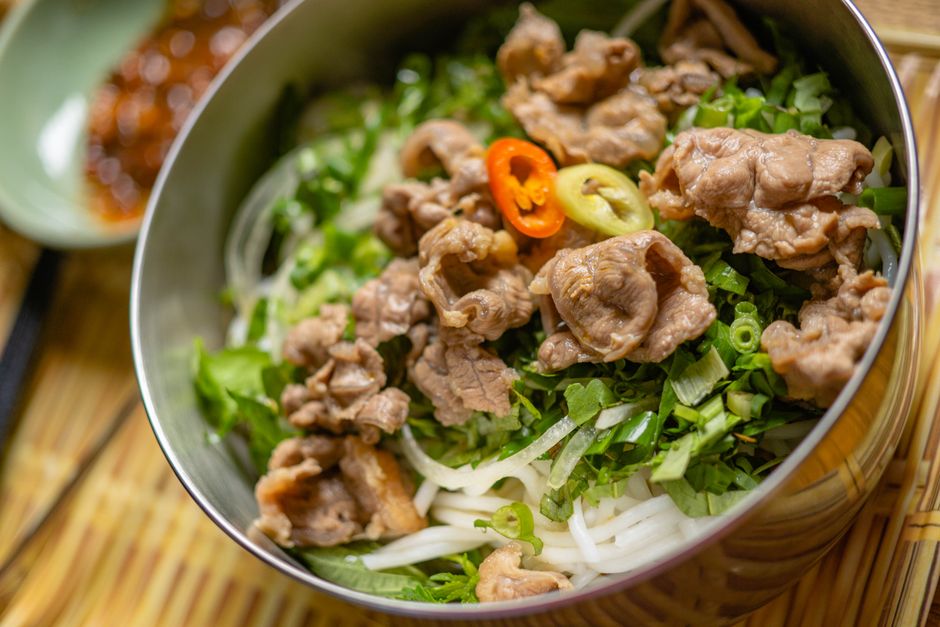
Com tam is broken rice — the fractured grains that were too small to sell whole. Historically, it was poor people’s food. Today, it is Saigon’s most satisfying lunch. At Com Tam Bui (84 Ly Tu Trong, District 1, Ho Chi Minh City), the pork chop plate costs 55,000 VND ($2.20 USD). It comes with a charcoal-grilled pork chop, a fried egg, shredded pork skin, a cucumber-tomato salad, and a small bowl of fish-sauce-based dipping liquid.
The pork chop is the star. It is marinated overnight in garlic, sugar, fish sauce, and lemongrass, then grilled over charcoal until the edges char. The fat renders into the meat. The broken rice absorbs the pork juice and the fish sauce. I ate this dish eight times. Every single plate was consistent.
If you are in Saigon for less than 48 hours, skip pho and eat com tam instead. The pho in Saigon is average. The com tam is world-class.
Coffee Culture: The Real Reason to Stay Caffeinated
Vietnamese coffee is not subtle. It is sweet, strong, and served over ice or with condensed milk. Cà phê sữa đá (iced coffee with condensed milk) is the standard order. At Cong Caphe (27 Nguyen Hue, Ho Chi Minh City), a tall glass costs 39,000 VND ($1.55 USD). The coffee is brewed through a single-serving metal drip filter called a phin. It takes 4-5 minutes to drip through. The result is a concentrated, syrupy shot that you stir into the condensed milk and ice.
The caffeine content is roughly double what you get in a standard Starbucks drip coffee. I measured: one glass at 8:00 AM kept me awake until 2:00 AM. If you have a low caffeine tolerance, order cà phê đen (black coffee) without condensed milk — it is still strong, but the lack of sugar makes the intensity more manageable.
Egg coffee (cà phê trứng) is a separate experience. At Cafe Giang (39 Nguyen Huu Huan, Hanoi), the egg coffee costs 35,000 VND ($1.40 USD). The egg yolk is whipped with condensed milk into a thick, meringue-like foam that sits on top of the coffee. It tastes like a liquid tiramisu. Drink it hot. The cold version separates and becomes grainy.
The Verdict: What Is Actually Worth Eating in Vietnam?
If you have exactly one week in Vietnam, here is the optimized eating schedule:
- Day 1 (Hanoi): Breakfast at Pho Thin. Lunch at Bun Cha Huong Lien. Dinner at Cha Ca Thang Long (turmeric fish with dill).
- Day 2 (Hanoi): Banh cuon (steamed rice rolls) at Banh Cuon Gia An for breakfast. Bun bo nam bo (beef noodle salad) at 67 Hang Dieu for lunch.
- Day 3-4 (Hoi An): Banh mi from Phuong daily. Cao lau (thick noodles with pork and herbs) at Cao Lau Khong Gian Xanh.
- Day 5-7 (Saigon): Com tam Bui for lunch. Banh xeo (crispy crepe) at Banh Xeo 46A for dinner. Hu tieu (pork noodle soup) at Hu Tieu My Tho for breakfast.
Was the pho really that good? Yes — at 8:00 AM from a specialist stall in Hanoi. No — at 7:00 PM from a generic restaurant in Saigon. The difference between a 10/10 bowl and a 5/10 bowl is not subtlety. It is freshness, technique, and timing. Go early. Go to the specialist. And do not skip the bun cha.