
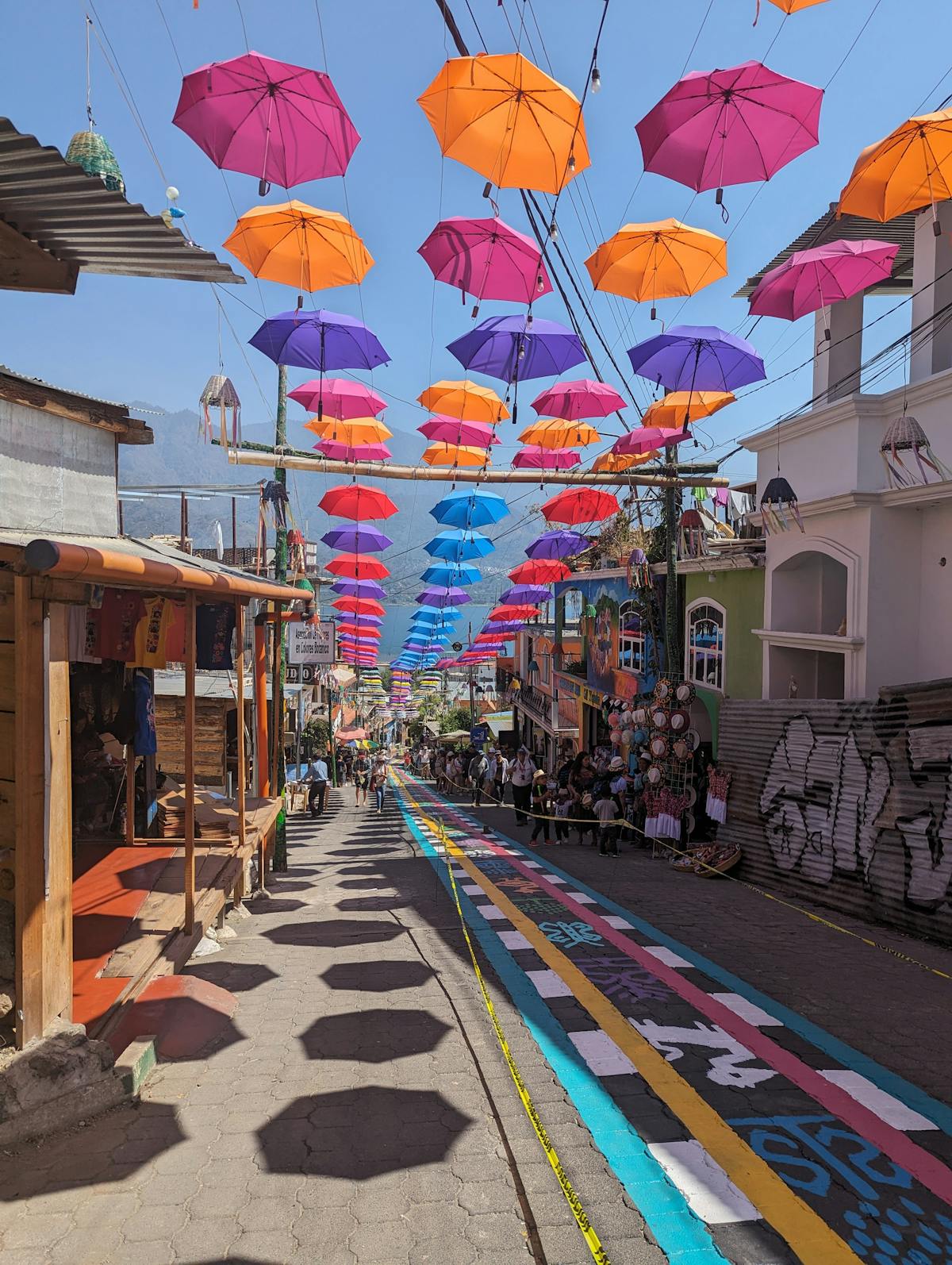
Guatemala remains one of Central America’s best-kept secrets, a country where ancient Mayan ruins rise above jungle canopies, volcanic peaks frame every horizon, and indigenous culture thrives in ways that feel genuinely untouched by mass tourism. While neighboring Mexico and Costa Rica draw millions of visitors each year, Guatemala sees only a fraction of that traffic, which means you get authentic experiences, lower prices, and the satisfying feeling of discovering somewhere before the crowds arrive.
Antigua Guatemala: Colonial Charm Beneath Volcanoes
The former capital city of Antigua is most visitors’ first stop, and it’s easy to see why. This UNESCO World Heritage city is a grid of cobblestone streets lined with pastel-colored colonial buildings, many beautifully crumbling in that photogenic way that makes every corner worth a photograph. Three volcanoes, Agua, Fuego, and Acatenango, form a dramatic backdrop visible from nearly every street corner.
Antigua is also one of the world’s best places to study Spanish, with dozens of language schools offering one-on-one tuition for as little as $150 per week including homestay. Even if you’re not there to study, spend a few days exploring the ruins of colonial churches and convents, browsing the jade and textile markets, and drinking some of the best coffee on the planet. Guatemala’s coffee is world-renowned, and the cafes in Antigua are an excellent introduction to single-origin highland beans.
Lake Atitlán: The Most Beautiful Lake in the World
Aldous Huxley famously declared Lake Atitlán the most beautiful lake in the world, and while that’s subjective, it’s hard to argue when you first see it. This massive volcanic crater lake is surrounded by three volcanoes and a dozen small towns, each with its own distinct character. The water shifts between deep blue and emerald green depending on the light, and the whole scene has an almost mystical quality.
San Marcos La Laguna is the spiritual and yoga retreat center of the lake, attracting seekers and healers from around the world. San Pedro La Laguna is the backpacker hub with lively bars and cheap eats. Santiago Atitlán is the most culturally significant, where the local Tz’utujil Maya community maintains traditions that predate the Spanish conquest. Getting between towns by public lancha (small boat) costs just a few quetzales and is half the fun, bouncing across the lake with volcanoes in every direction.
Tikal: Mayan Grandeur in the Jungle
Deep in the Petén jungle of northern Guatemala, the ancient city of Tikal is one of the most impressive archaeological sites in the Americas. At its peak around 700 AD, Tikal was home to an estimated 100,000 people and was one of the most powerful cities in the Mayan world. Today, its massive stone temples rise above the rainforest canopy, creating a scene that feels genuinely awe-inspiring.
The sunrise tour is the quintessential Tikal experience. You enter the park before dawn and climb Temple IV, the tallest structure at 65 meters, to watch the sun rise over the jungle as howler monkeys roar in the trees below and toucans fly between the temple tops. It’s a goosebump-inducing moment that alone justifies a trip to Guatemala. Plan to spend a full day exploring the site, as it covers over 16 square kilometers and there’s far more to see than just the main plaza.
Semuc Champey: Paradise Found
Getting to Semuc Champey requires determination. The natural limestone bridge with its cascading turquoise pools is reached via hours of bumpy dirt roads through the jungle. But this difficulty of access is precisely what keeps it beautiful and uncrowded. The pools are formed where the Cahabón River disappears underground, leaving a 300-meter limestone shelf above with a series of stepped pools in impossible shades of blue and green.
You can swim in the pools, hike to a viewpoint above for the panoramic photograph, and explore the caves where the river runs underground by candlelight. The nearby town of Lanquín has basic but comfortable hostels and a growing food scene. The journey there from Antigua or Guatemala City takes about nine hours, but every traveler who makes the effort agrees it’s one of the highlights of their trip.
Practical Tips for Visiting Guatemala
Guatemala is remarkably affordable. A comfortable daily budget of $30-50 USD covers accommodation, meals, local transport, and activities. The local currency is the quetzal, named after the resplendent quetzal bird that is the national symbol. ATMs are widely available in larger towns, though carry cash for smaller villages.
Safety is a common concern, and it’s true that Guatemala City has areas best avoided. However, the tourist trail from Antigua to Lake Atitlán to Flores (the gateway to Tikal) is well-traveled and generally safe. Use common sense, avoid walking alone at night in unfamiliar areas, and use registered shuttle services between destinations rather than local chicken buses if you’re uncomfortable navigating the local transport system.
The best time to visit is during the dry season from November to April, when skies are clear and roads are passable. The rainy season (May-October) brings afternoon downpours but also lush green landscapes and fewer tourists.
Go Before the Secret Gets Out
Guatemala is at that perfect sweet spot in its tourism development: enough infrastructure to travel comfortably, but not yet so popular that it’s lost its authenticity. The Mayan culture here is living and vibrant, not just something preserved in museums. The landscapes are extraordinary, the people are warm, and your money goes incredibly far. Whether you come for the ruins, the volcanoes, the lake, or the coffee, Guatemala has a way of getting under your skin and making you plan your return trip before you’ve even left. Don’t wait for everyone else to discover it first.