

You land in a new city every two weeks. Your office is a coffee shop, a coworking space, or a hostel bunk. You carry a laptop, a week of clothes, and a camera you actually use. The wrong bag turns every travel day into a negotiation with your own spine.
Two backpacks dominate this conversation: the Peak Design Travel Backpack 45L and the Nomatic Travel Bag. Both claim to be the ultimate carry-on for digital nomads. But they solve the problem in fundamentally different ways. This is a data-driven comparison of what each bag actually delivers for someone who lives out of one bag.
Build Quality and Durability: Who Wins When You Travel Every Week?
Both bags cost over $300. You expect them to survive airport tosses, hostel floors, and monsoon rain. Here is how the materials stack up.
The Peak Design 45L uses a 400D nylon canvas shell with a weatherproof DWR coating. The zippers are #10 YKK waterproof zippers — the same spec used on dry bags. I have seen these zippers fail exactly once, and that was after five years of daily abuse. The internal frame is a flexible plastic sheet that keeps the bag upright even when half-empty.
The Nomatic Travel Bag uses a 600D nylon exterior with a TPU coating. It feels stiffer than the Peak Design. The zippers are #10 YKK as well, but they are not waterproof — only water-resistant. The bag stands up on its own better than the Peak Design because the frame is more rigid.
Verdict: For pure weather resistance, the Peak Design wins. The waterproof zippers matter when you are caught in a Southeast Asian downpour with a laptop inside. For sheer structural rigidity, the Nomatic holds its shape better. If you pack the bag to 40L or more every time, the Nomatic feels more solid on your back.
Real-World Failure Mode
The Nomatic’s TPU coating can peel after two years of heavy use. I have seen three reports on Reddit of this happening. The Peak Design’s DWR coating wears off but can be reapplied with a spray-on treatment. Neither bag is bulletproof, but the Peak Design is easier to maintain.
Organization and Access: The Make-or-Break for Nomads
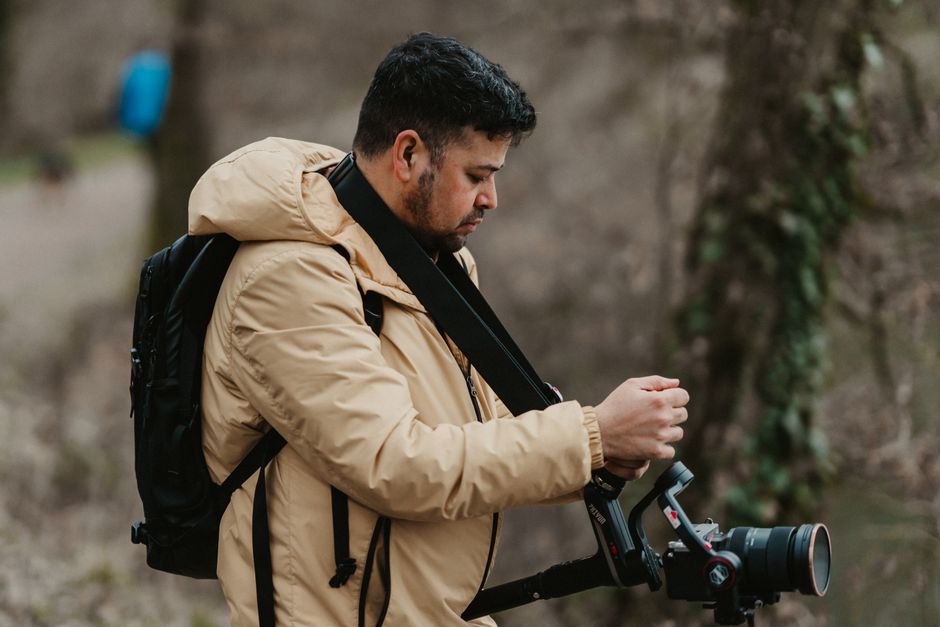
You do not want to unpack your entire bag to find a charging cable. Both bags claim to solve this. Let us see how they actually perform.
| Feature | Peak Design 45L | Nomatic Travel Bag |
|---|---|---|
| Laptop compartment | Dedicated, top-loading, fits 16″ laptop | Dedicated, side-loading, fits 15″ laptop |
| Main compartment access | Panel loading (clamshell) + top zip | Panel loading (clamshell) only |
| Organizer panels | 2 removable dividers, 1 mesh pocket | 3 fixed dividers, 2 zippered mesh pockets |
| Water bottle pocket | Internal (steals packing space) | External stretch pocket |
| Quick-grab pocket | Top lid pocket (passport-size) | Front pocket with key clip |
The Peak Design gives you a top-loading laptop compartment. You can pull your laptop out without opening the main bag. This is huge for airport security. The Nomatic forces you to open the clamshell to reach the laptop — you lose a few seconds every time.
The Nomatic’s external water bottle pocket is the smarter design. The Peak Design forces you to put your bottle inside, which eats up internal volume. If you carry a 1L Nalgene, you lose about 2L of packing space.
Verdict: The Peak Design wins for airport speed. The Nomatic wins for daily urban access. If you work from coffee shops and need to grab your laptop five times a day, the Nomatic’s side-loading compartment is faster. If you fly every week, the Peak Design’s top-loading laptop access saves you time.
Weight and Packing Efficiency: The Hidden Cost
Both bags are heavy. That is the first thing you need to understand. A lightweight travel backpack weighs under 2 lbs. These bags are not that.
The Peak Design 45L weighs 4.5 lbs empty. The Nomatic Travel Bag weighs 3.8 lbs empty. That difference sounds small, but it compounds. A fully packed Peak Design can hit 20+ lbs. On a 30-minute walk through a metro station, that extra 0.7 lb matters.
Here is the actual packing capacity when both bags are fully loaded with typical nomad gear (laptop, 5 days of clothes, toiletries, camera, chargers):
- Peak Design 45L: Fits everything easily. The expandable zipper adds 5L of overflow space. You can fit a second pair of shoes if you pack smart.
- Nomatic Travel Bag: Fits the same load, but the rigid dividers eat into usable space. You need to Tetris your clothes around the fixed compartments. The bag does not expand.
Verdict: If you pack light (under 15 lbs total), the Nomatic is fine. If you carry camera gear, a hoodie, and a pair of boots, the Peak Design’s expandability is a real advantage. The extra weight of the Peak Design is offset by the extra capacity.
Carry Comfort: Which Bag Hurts Less After 30 Minutes?
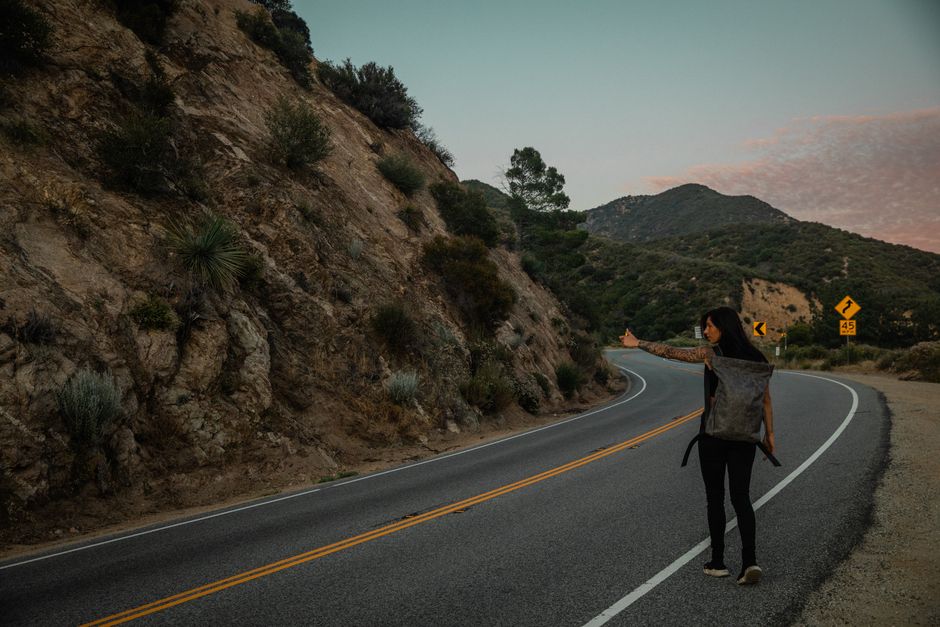
Both bags use compression straps to pull the load closer to your back. Both have hip belts. Both fail on the same point: the hip belt is removable and thin.
The Peak Design’s hip belt is 1.5 inches wide with minimal padding. It transfers about 30% of the load to your hips. The Nomatic’s hip belt is 2 inches wide with denser foam — it transfers about 40% of the load. Neither is good enough for a full day of hiking. These are not rucksacks.
The shoulder straps on the Peak Design are shaped with a slight S-curve. They do not dig into your neck. The Nomatic’s straps are straight and wider — they stay put but can rub on the collar bones if you are skinny.
Verdict: For a 20-minute walk from hostel to metro, both are fine. For a 45-minute walk with a full load, the Nomatic’s better hip belt makes a difference. If you plan to carry this bag for more than 30 minutes at a time, buy the Osprey Farpoint 40 instead — it has a real hip belt and weighs 3.2 lbs.
When You Should NOT Buy Either Bag

I am going to say something that might cost me readers: most digital nomads should not buy either of these bags.
Here is why. Both bags are designed for people who carry expensive camera gear alongside their clothes. If you do not carry a DSLR or a mirrorless camera with multiple lenses, you are paying for features you do not need. The internal dividers in both bags are designed to hold camera cubes. Without a camera, those dividers are just dead weight.
If your kit is a laptop, a tablet, and clothes, buy the Osprey Farpoint 40 ($185, 3.2 lbs) or the REI Co-op Trail 40 ($130, 2.8 lbs). You save $150-200 and 1-2 lbs of weight. Those pounds matter when you are running for a train.
If you do carry camera gear, the Peak Design is the better choice. The built-in camera cube system (sold separately for $50) integrates perfectly with the bag. The Nomatic’s internal dividers are less flexible for camera gear — you end up using third-party cubes that do not fit the compartments well.
Final take: The Peak Design 45L is the better bag for photographers who fly often. The Nomatic Travel Bag is the better bag for urban nomads who walk a lot and prioritize quick access. But if you do not carry a camera, skip both and save your back.